
Personalisation
Personalisation is built into Contensis, so you can show visitors tailored content without adding a separate platform. Your team defines audiences from real behaviour, shapes what each one sees, and controls when it goes live, all in the same place you manage your content.

Personalise with data that never leaves the browser
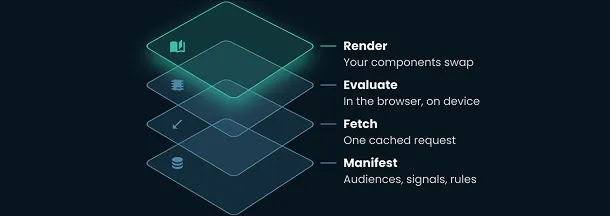
Contensis personalisation runs entirely in the visitor's browser by default, with audience data stored in local storage rather than sent to Contensis or any third party. There's no server-side tracking to govern, so personalisation works within the consent and compliance framework you already have.

Control who sees what across your site without writing code
Authors create and manage audiences in the Contensis interface, combining behavioural conditions like pages visited, location, or query strings, without waiting for a developer. Content then reaches people based on who they are and what they've done, not just the page they happen to be on.

Reuse targeting logic across audiences
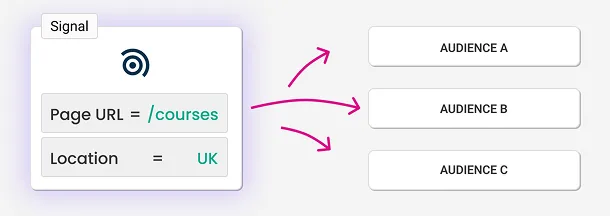
Create reusable behavioural rules – such as URL patterns, query string values, cookie contents, or location – that you combine to build audience conditions. Define visitor behaviour criteria once as named signals, then reuse them across multiple audiences without duplicating logic.
Easily manage complex audiences
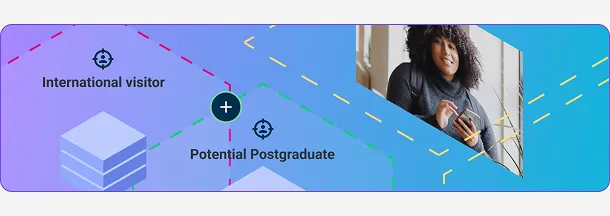
Use one audience as a condition inside another, so you build broad segments like International Visitor or Potential Postgraduate Student once, then combine them into the specific groups you want to target. Change a shared building block in one place and everything built on it gets updated too, so your targeting grows more precise without getting harder to maintain.
Target a whole page or a single section to the right visitors
Add an audience picker field to any content type or component, then let authors tag content with the audiences it's meant for. The content carries its own audience information, so it can drive personalised listings and page sections without targeting rules living in your templates or front-end code.

Sharpen personalisation with your own first-party data
Create your own visitor properties – like registration status or a value from a form submission – beyond the standard behavioural signals, then assign them to a signal to use as an audience condition. Your personalisation reflects what visitors actively tell you about themselves, so you can segment audiences more precisely than browsing behaviour alone allows.

See what each audience sees before you publish
Preview any page as a specific audience would see it, so you check exactly what each audience group gets before an experience goes live. Test against the latest unpublished manifest, or reset stored and session data to retest a page from a clean first visit, all without relying on a developer to set it up.


Govern personalisation as you scale
Set separate permissions for who can create and change audiences and signals, who can make personalisation changes live, and who can author the content they apply to. A central team can own the targeting rules while content editors apply them to content and components, meaning personalisation stays governed as it scales across teams.

Publish personalisation when you're ready
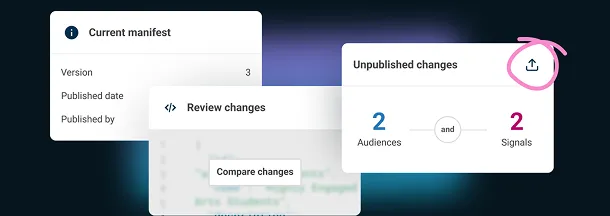
All your audiences and signals publish together as a single versioned snapshot, so personalisation goes live when you choose rather than the moment you save a change. Review a diff of every pending change before you publish, so nothing half-finished reaches visitors. Each publish is recorded with its version, date, and who made it.
Get started with pre-built packages
Our client-side JavaScript packages fetch the personalisation manifest, evaluate which audiences a visitor belongs to, and store the result in local storage. You add personalisation to your front end with a supported package instead of building the evaluation logic yourself, and membership is worked out the same way as it is in Contensis, so behaviour stays consistent everywhere.